A practical guide

What fish
is that?

You saw something underwater, caught something on a line, or found a photo you can’t name. Here are the ways to figure it out — compared honestly, with real data.

1,700+

Marine Species

10,000+

Species by Photo ID

50+

Countries

4.6

Average Rating

Simple as 1-2-3

How it works

1

Spot a fish

See something interesting underwater, on a line, or in a photo.

2

Snap or describe

Take a photo for AI identification, or describe traits like colour, shape, and habitat.

3

Get identification

Receive an instant match with species details, photos, and distribution info.

The guide

How people identify fish

Four approaches, from the phone in your pocket to a genetics lab. Each has trade-offs. Here is what you need to know about every one of them.

01

Field guides & reference books

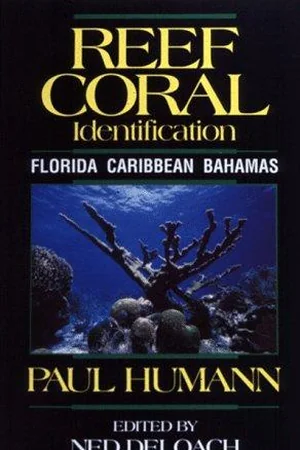
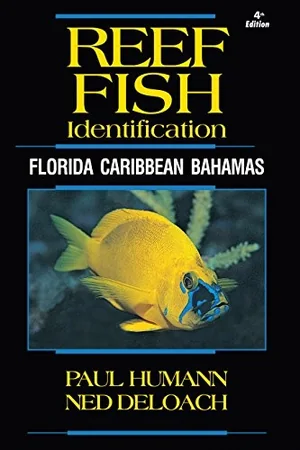
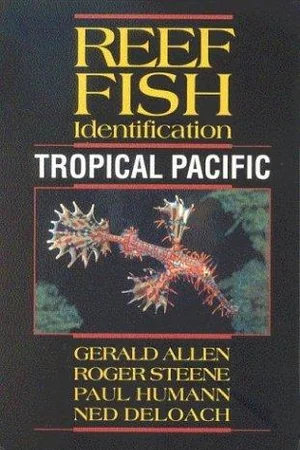
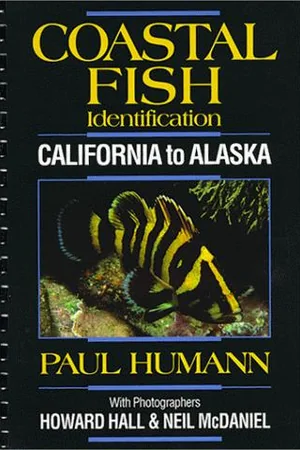
The original method. Dichotomous keys walk you through paired questions about morphology — body shape, fin placement, colour — until you reach a species name. FAO Species Catalogues and regional atlases like the Reef Fish Identification series by Humann & DeLoach are standards in the field.

They work completely offline (they are books), cost $20–80 each, and are extremely reliable for the regions they cover. The trade-off: you need some familiarity with anatomical terminology, identification takes minutes rather than seconds, and coverage is regional rather than global.

100% offline $20–80 per book Regional coverage
Reef Fish Identification Coral Identification Coastal Fish Identification Tropical Pacific Fish ID

02

Fish identification apps

The fastest path from “what is that?” to an answer. Dedicated apps combine AI photo recognition with structured species databases, so you can identify fish by snapping a photo or filtering by traits you remember — colour, body shape, habitat, region.

The two worth knowing about:

Seabook app icon Seabook

Built for divers, snorkellers, and anglers · iOS 4.7★ · Android 4.5★

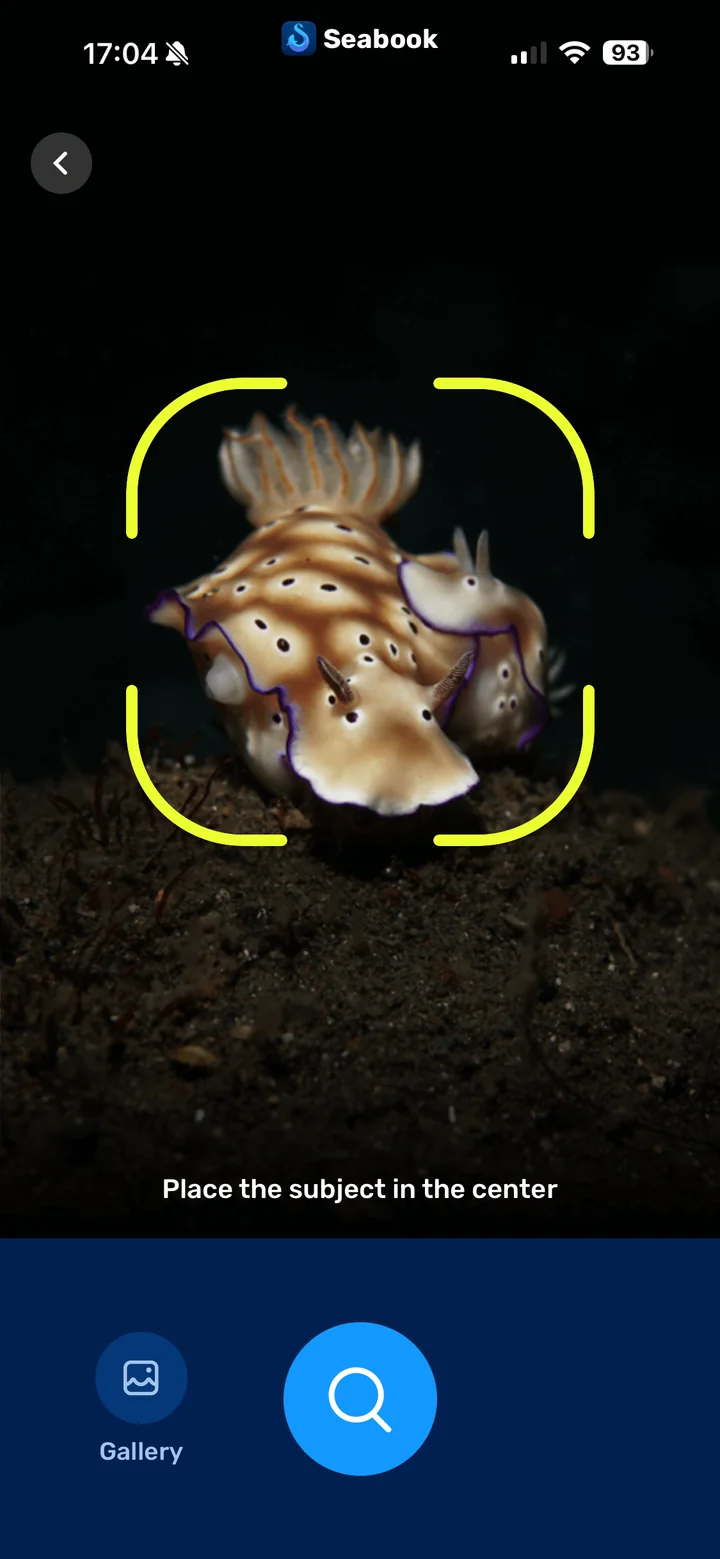
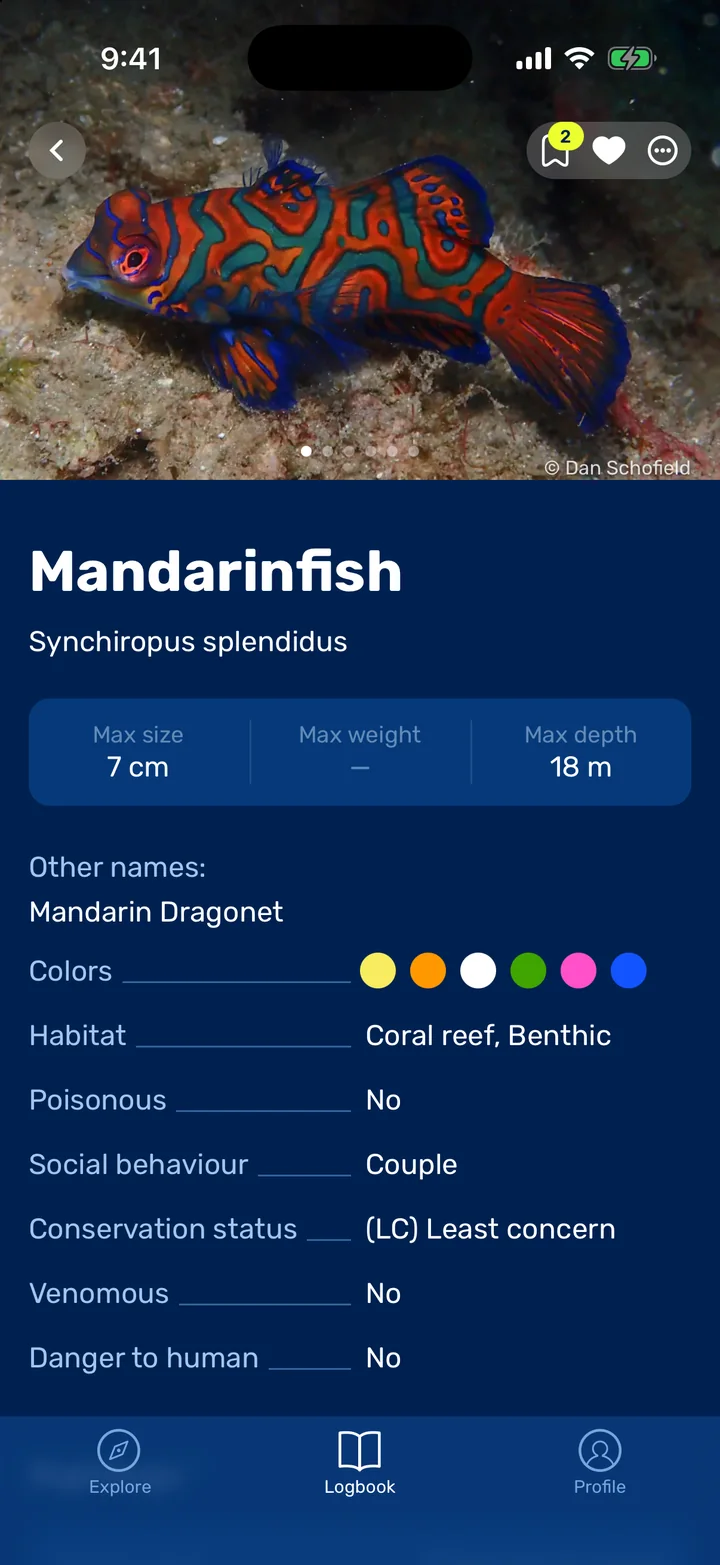
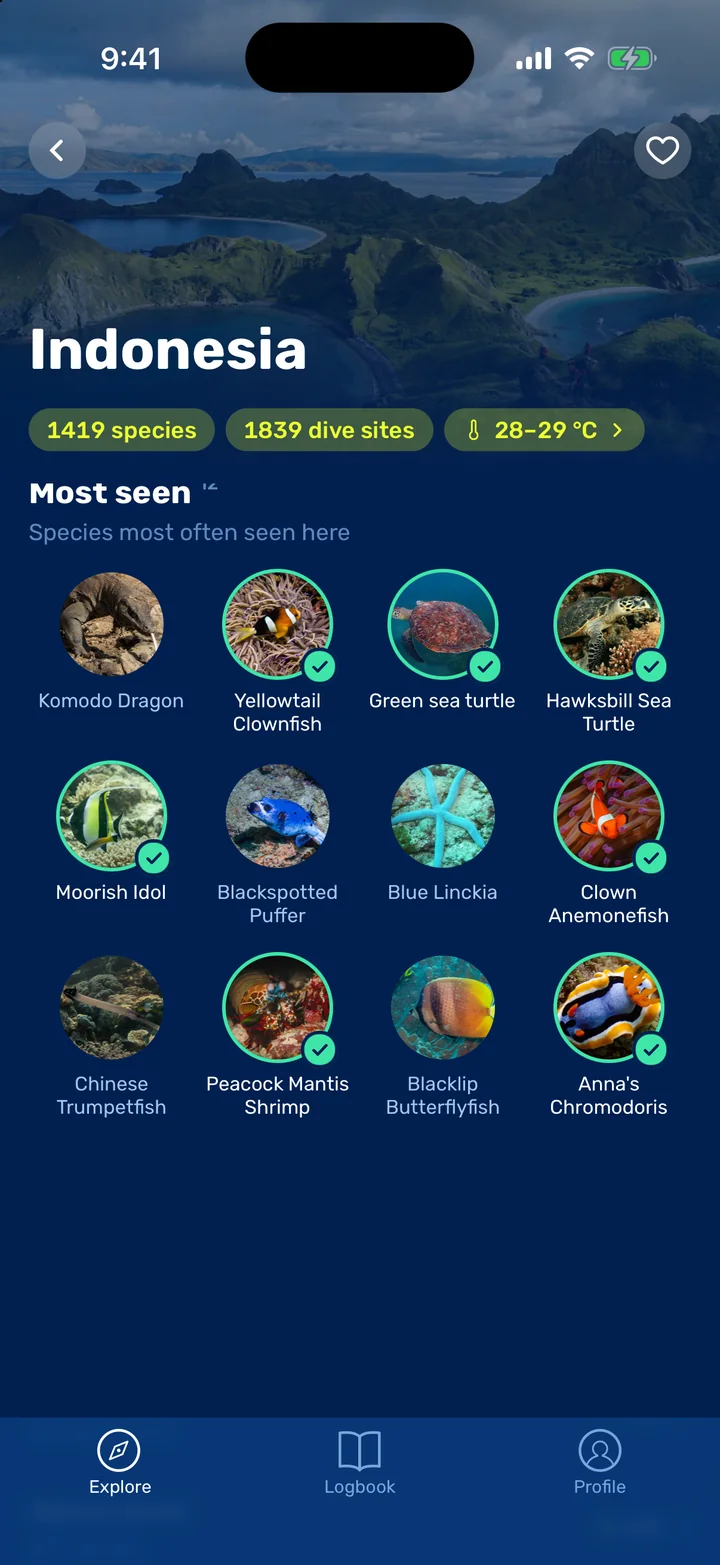
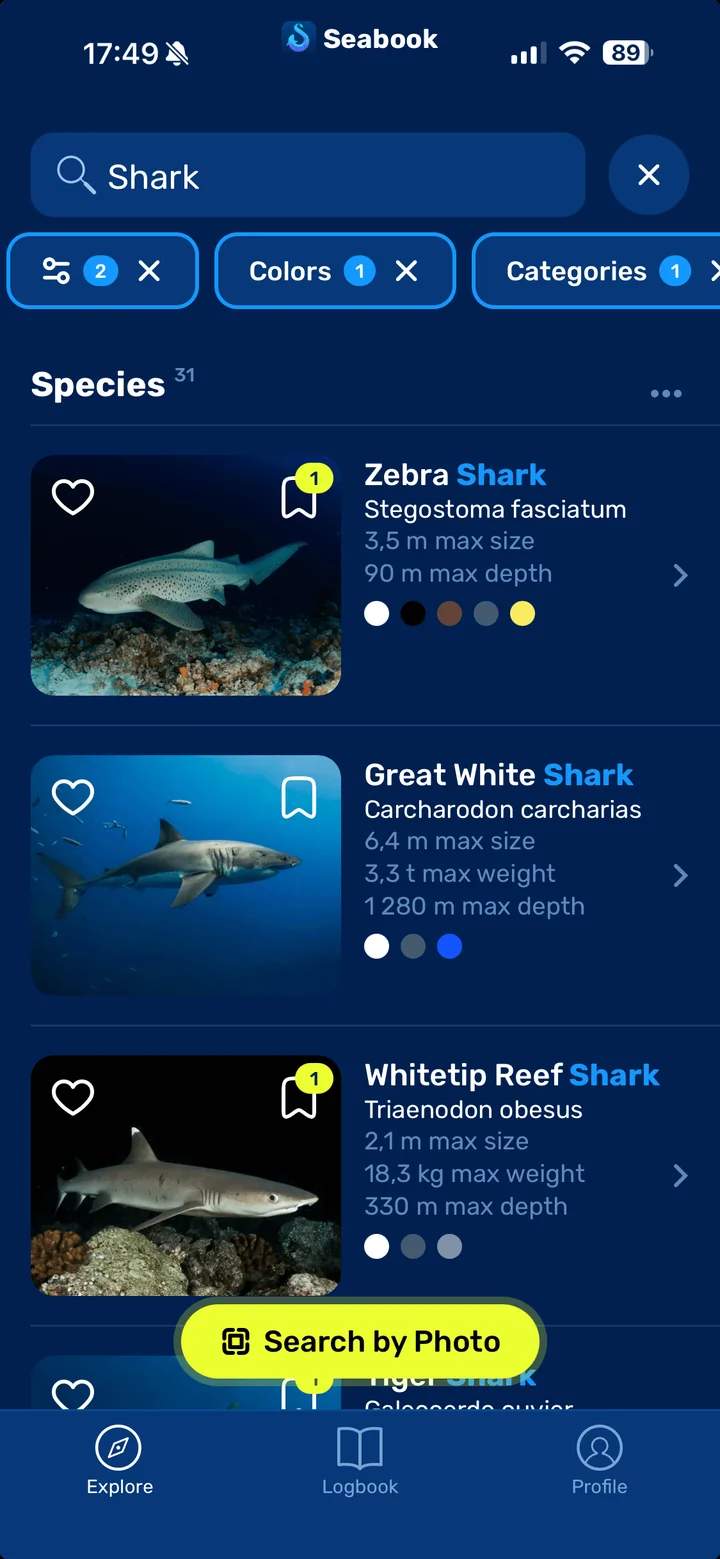
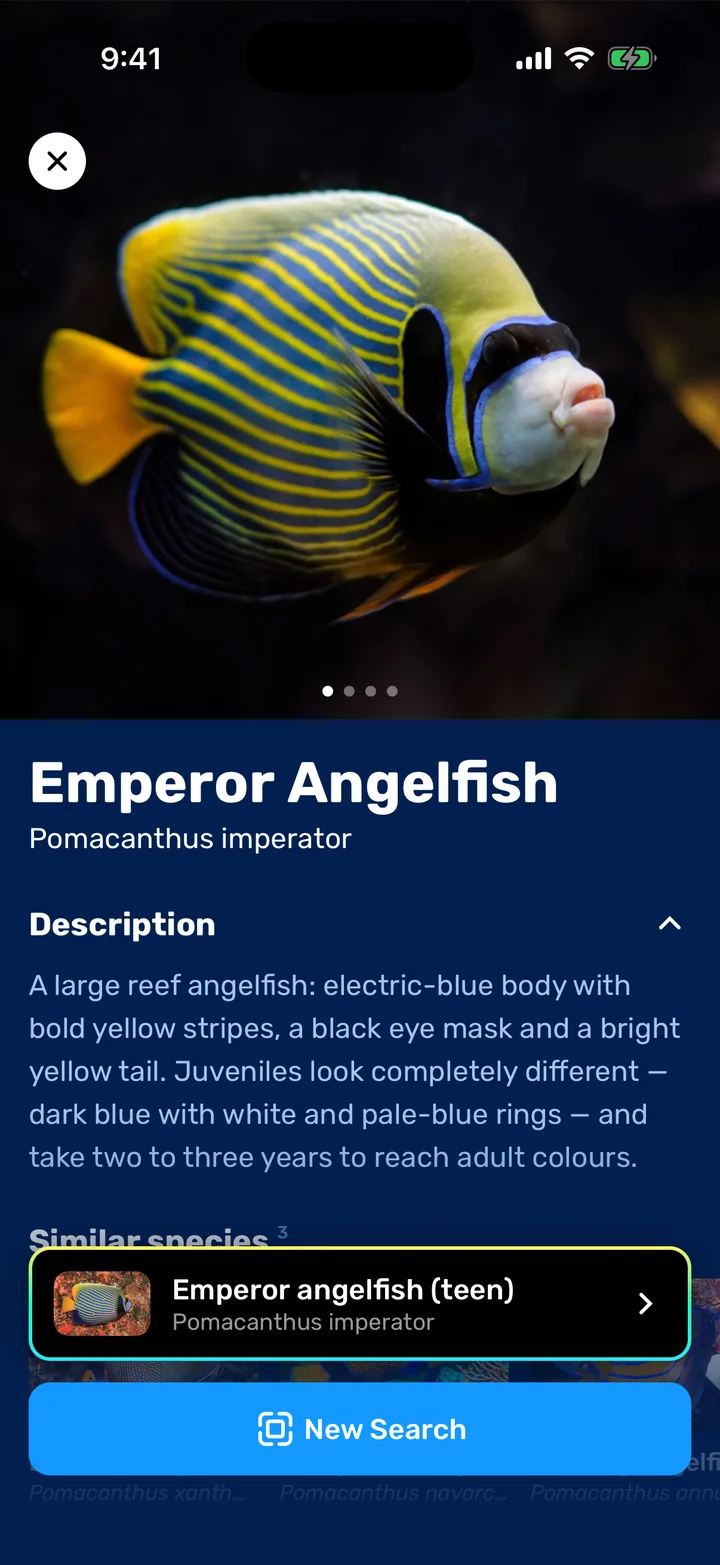
Seabook photo identification Seabook search with filters Seabook species profile Seabook explore screen

A curated database of 1,700+ marine species across 275 groups — fish, invertebrates, and corals. Identify by photo with 10,000+ species searchable by photo, or use smart filters: colour, pattern, body shape, habitat, and geographic region. Every species entry includes photos, descriptions, and distribution maps.

What sets it apart: an integrated dive log (depth, duration, conditions, GPS), a sighting journal with photo capture and size/weight notes, custom collections by trip or region, a global dive-site map, multilingual interface, and full offline mode — the entire species library works without a signal. Free to start. Premium unlocks the full database for $20–$37.

iNaturalist app icon iNaturalist

Citizen science platform · Free · iOS, Android, Web

A general biodiversity platform — not fish-specific — with 100M+ observations across 372,000+ species. Upload a photo and the AI suggests a species; then community experts verify. Great for contributing to science, less practical for in-the-moment underwater identification. Requires internet. No dive logging. No fish-specific search filters.

03

AI chatbots

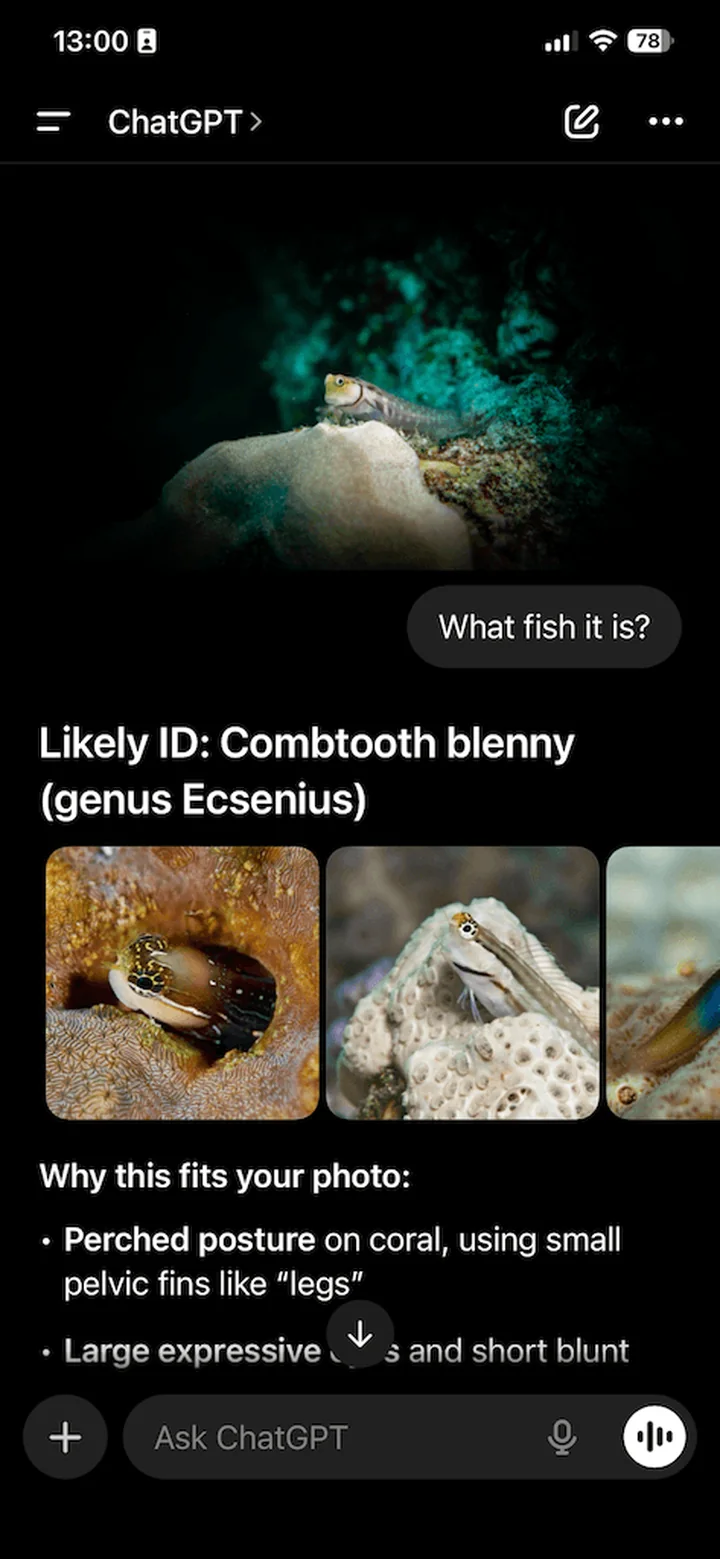
Upload a photo and ask “what fish is this?” These large multimodal models can recognise colour patterns, body shapes, and fin structures from their training data. For common species, the answer is often correct.

The limitations are real, though: no structured fish database to fall back on, no trait-based search when your photo is unclear, no offline mode, and accuracy drops for rare or region-specific species. There is also no way to log dives or build a sighting history. Think of them as a quick second opinion, not a primary identification tool.

ChatGPT app icon ChatGPT

OpenAI · Free & Plus ($20/mo) · iOS, Android, Web

ChatGPT fish identification conversation

The most popular general-purpose AI chatbot. Accepts photo uploads and can identify common fish species from images. Works best with clear, well-lit photos of widespread species. No fish-specific database, offline mode, or dive logging.

Google Gemini app icon Google Gemini

Google · Free & Advanced ($20/mo) · iOS, Android, Web

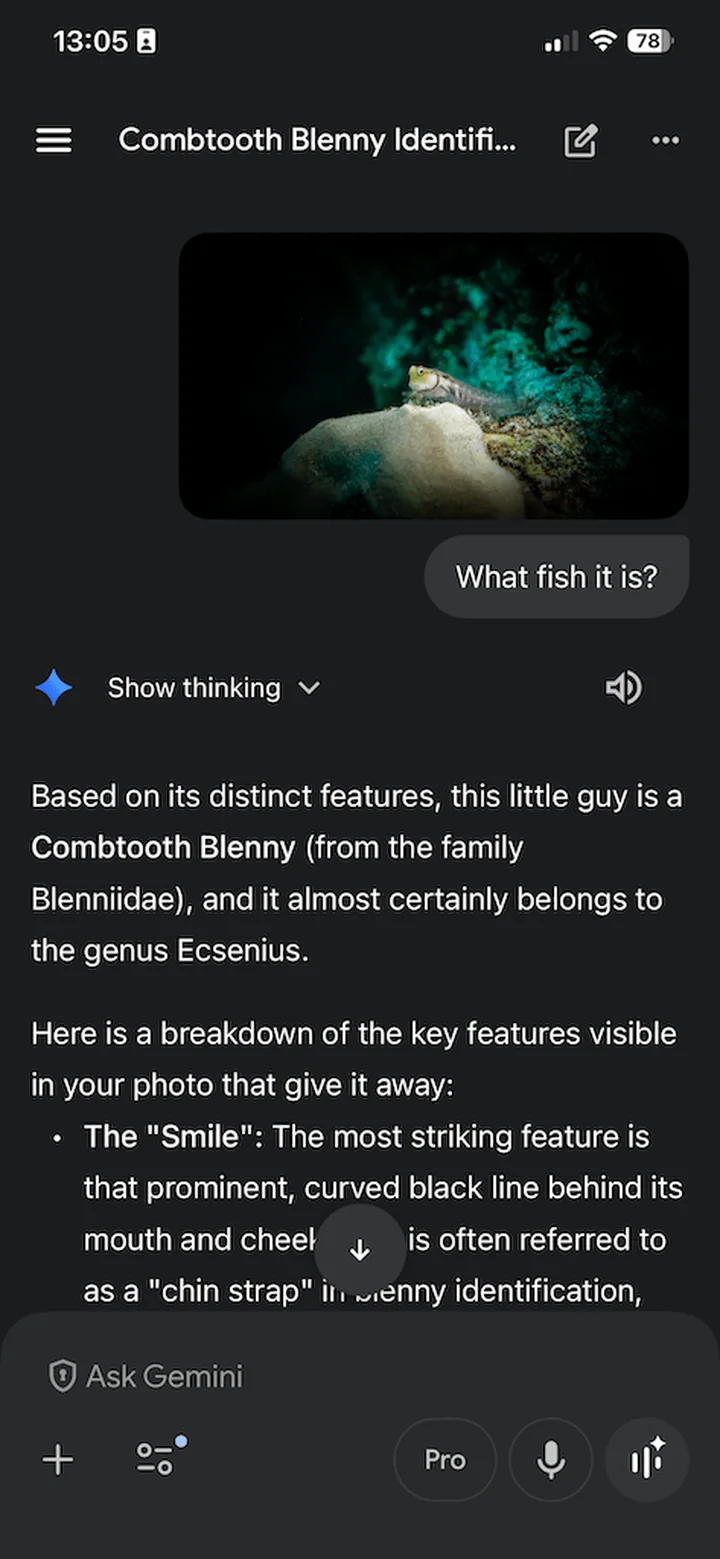
Google Gemini fish identification conversation

Google’s multimodal AI assistant. Similar photo-based identification capabilities to ChatGPT, with tight integration into the Google ecosystem. Same core limitations: no curated species database, no offline support, and lower accuracy on rare or regional species.

04

Laboratory methods

When the stakes are highest — regulatory enforcement, forensic analysis, conservation research — scientists turn to DNA barcoding (using the CO1 gene), SNP analysis, scale morphology, or otolith analysis. Accuracy reaches 80–100%, but these methods require specialised equipment, trained personnel, and laboratory access.

Not practical for everyday identification. But if you need to verify a species for legal or scientific purposes, this is the gold standard.

Side by side

Compare your options

Real features, real data. No marketing fluff.

Comparison of fish identification methods by features, cost, and capabilities
Feature Field Guides Recommended Seabook iNaturalist AI
Focus Regional species Marine species All biodiversity General AI
Species database 500–1,500 per book 1,700+ marine 372,000+ (all life) No database
ID by Photo
Manual lookup
10,000+ species
AI + community
Multimodal AI
Search by Filters Dichotomous keys
Colour, shape, habitat, region
Location, taxa
Natural language
Search by Location Regional only
300+ locations
Global map-based
Dive Log
Depth, duration, GPS
Species Collections
Custom / Region
Projects & lists
Sightings
Photos, notes, size
300M+ observations
Wiki / Encyclopedia
Printed entries
Full species profiles
Community notes General knowledge
Multilingual Per-language editions
6 languages
Web only
All languages
Offline Mode
It’s a book
Full encyclopedia
Platforms Print iOS, Android iOS, Android, Web iOS, Android, Web
Cost $20–80 per book Free / $20–$37 Free Free / $20/mo
Best for Serious study Divers, snorkellers, anglers Citizen scientists Quick casual checks

From the field

What divers and anglers say

“After every dive I pull up Seabook and go through species with my students. They point at the screen, I show the profile — way faster than passing a soggy field guide around the boat.”

Marco T.

PADI Dive Instructor, Red Sea

“For my thesis I needed to catalogue species at three reef sites. The filter search helped me narrow down IDs even when my underwater photos were grainy. Saved me hours compared to flipping through field guides.”

Aisha R.

Marine Biology Student, University of Queensland

“Caught something weird off Galveston and had zero signal. Pulled up Seabook offline, searched by body shape — turned out to be a lookdown fish. No other app works without internet like that.”

Jake D.

Recreational Angler, Texas

Questions & answers

Frequently asked questions

What are the best ways to identify a fish?
The most common methods are: (1) Fish identification apps like Seabook, which offer AI photo ID and trait-based search across 1,700+ marine species with offline support; (2) Citizen science platforms like iNaturalist with community verification; (3) General AI chatbots like ChatGPT and Gemini; (4) Traditional field guides and dichotomous keys; and (5) Laboratory methods like DNA barcoding for scientific-grade accuracy.
What is the best fish identification app?
Seabook is a dedicated fish identification app covering 1,700+ marine species across 275 groups including fish, creatures, and corals. It offers AI photo identification across 10,000+ species by photo, trait-based search by colour, shape, habitat and region, integrated dive logging, a sighting journal, and full offline mode. Rated 4.7 on iOS and 4.5 on Android. Free to start with premium options from $20 to $37.
Can ChatGPT identify fish from a photo?
Yes, ChatGPT and Google Gemini can identify fish from photos using their multimodal AI capabilities. They work well for common species but accuracy varies for rare or region-specific fish. They lack a structured species database, offline mode, and fish-specific search filters that dedicated apps like Seabook provide.
Is there a free fish identification app?
Yes. Seabook offers a free tier that lets you explore species and try photo identification. Premium plans range from $20 to $37 for full database access, offline mode, and advanced features. iNaturalist is completely free but is a general biodiversity platform, not fish-specific.
Can I identify fish offline?
Seabook is one of the few apps that offers full offline mode, meaning the entire species encyclopedia is available without an internet connection. This is especially useful for divers, anglers, and snorkellers in remote locations. Traditional field guide books also work offline by nature.

Start identifying fish today

Download Seabook and try it on your next dive, snorkel, or fishing trip. The species library works offline, so you are covered even in the most remote spots.

Get Seabook Free

Free to start